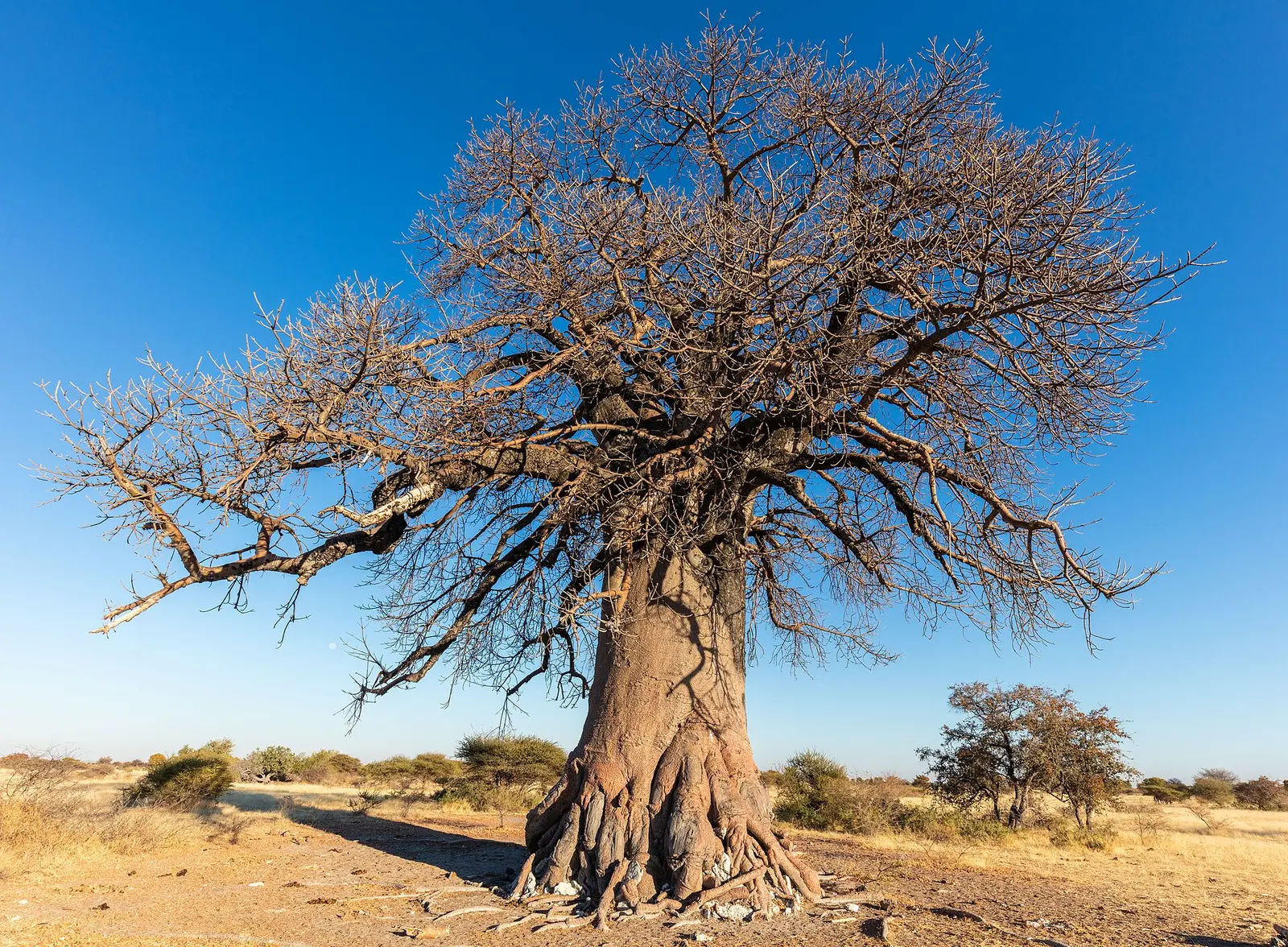
African Baobab (Adansonia digitata)
- Native to
- mainland Africa
- Height
- Up to 100 ft
- IUCN status
- Least Concern
- Also called
- Tree of Life, Dead Rat Tree, Cream of Tartar Tree, Monkey Bread Tree, Upside Down Tree, Kremetart (Afrikaans), Mbuyu (Swahili)
Found across sub-Saharan Africa and known to many as the Tree of Life, this ancient species of baobab is cultivated worldwide for its nutritious fruit.
The African Baobab, Adansonia digitata, has over 100 different recorded names. Known as the Dead Rat Tree, Cream of Tartar Tree, Mock Cotton Tree, Monkey Bread Tree, Upside Down Tree, Kremetart (Afrikaans), Mbuyu (Swahili), and many many other names.
This legendary tree has been widely cultivated for agricultural, horticultural, and sociocultural reasons for many hundreds of years.
The leaves of the Digitata Baobab can be used to treat fevers, when they aren’t being eaten as salad. The fruit is widely harvested and used for food, drinks, and more popularly, international exports. The roots of the tree provide a red dye which is used regionally across Africa and Tropical Asia.
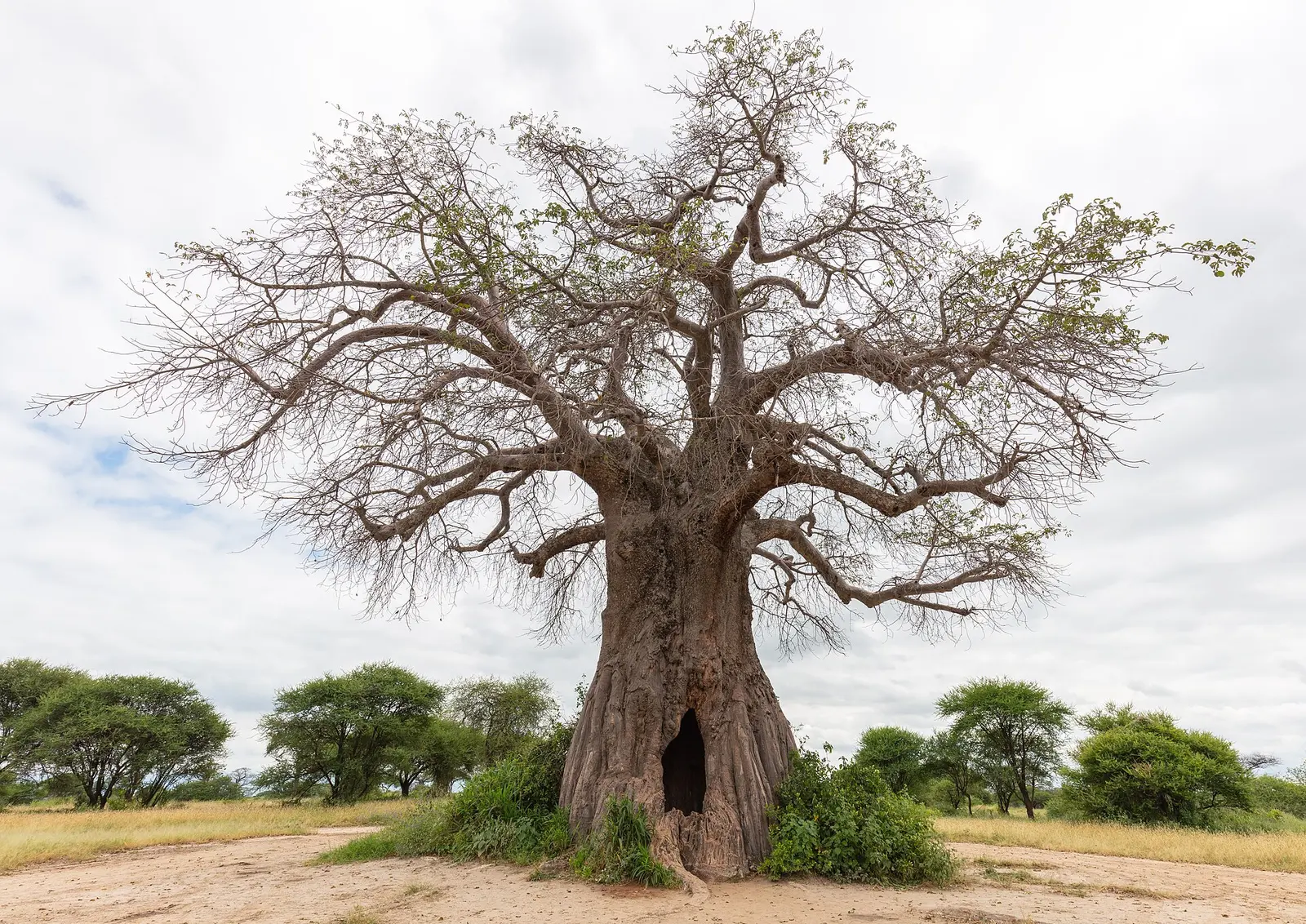
The trees can grow to 100 feet tall and the largest African baobab on record measures over 150 feet around. Digitatas have massive ornate crowns that resemble an underground root system.
The leaves are palmate and can vary in size from plant to plant. Unique among baobabs, the pale flowers are situated at the end of a sometimes 3 foot long stalk, hanging down from the tree.
Digitata baobabs are not in threat of endangerment. They are found naturally occurring in over 30 African countries.
A note on Adansonia kilima
Adansonia kilima was described in 2012 as a separate African species, characterized by smaller flowers and varied growth patterns, and was thought to be prevalent across Africa, long assumed to be digitata. Later genetic work didn’t support it as a distinct species, and most botanists now treat it as part of Adansonia digitata.
Growing digitata
This is the one I recommend to most people. The seeds are reliable, the trees are forgiving, and they make great bonsai. Soak 24–36 hours, then sow about an inch deep in damp (not saturated) soil. See the germination guide and tree care guide.
Other baobab species
Australian Baobab (Boab) · Grandidier's Baobab · Malagasy Baobab · Za Baobab · Suarez Baobab · Fony Baobab · Perrier's Baobab
Grow your own
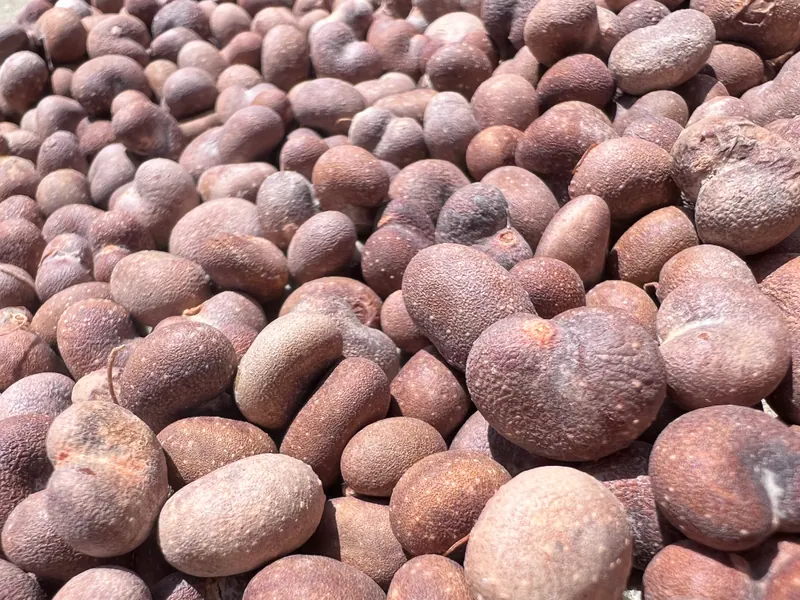
Adansonia digitata
African Baobab Seeds
The African baobab. Easiest to grow and the best place to start.
from $5
Choose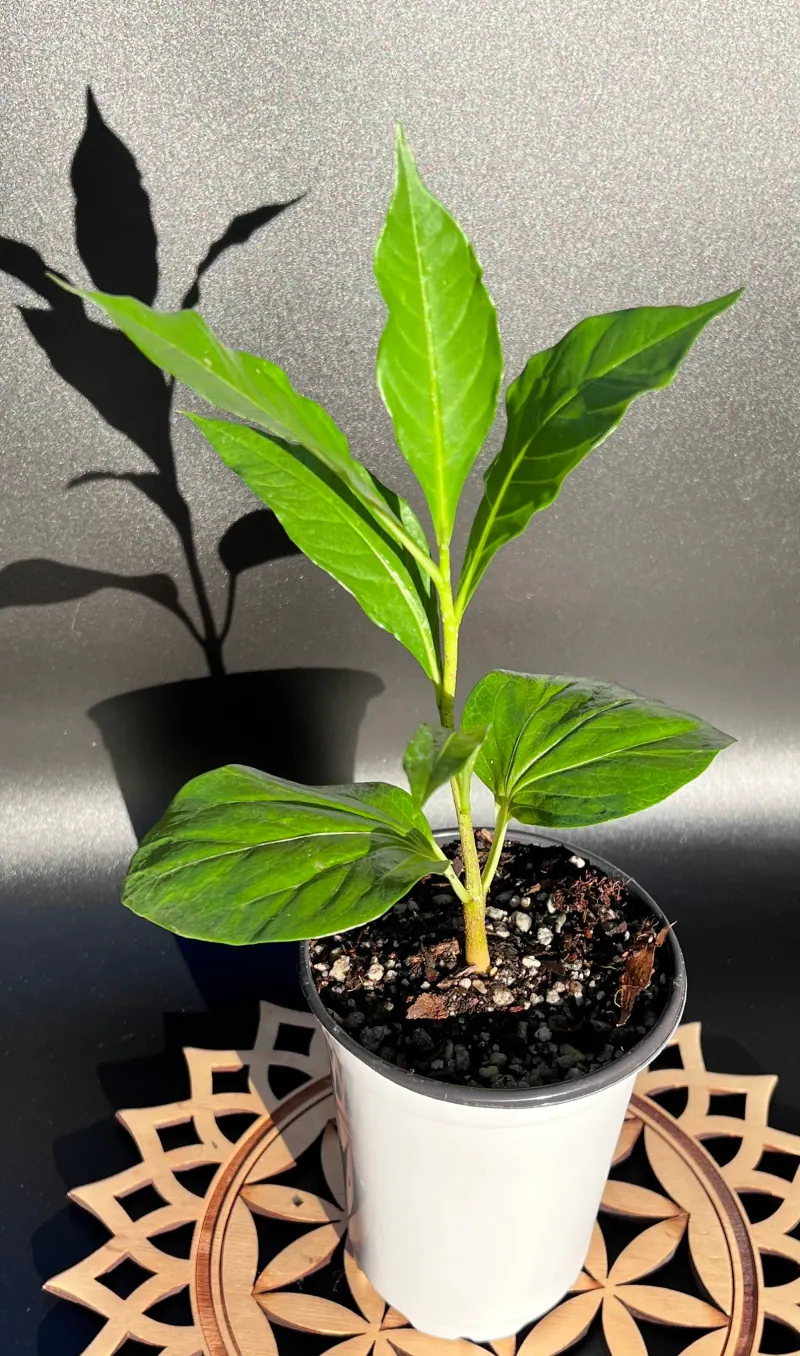
Adansonia digitata
African Baobab — Live Tree
Bare-root African baobabs, from seedlings to young trees.
from $30
Notify me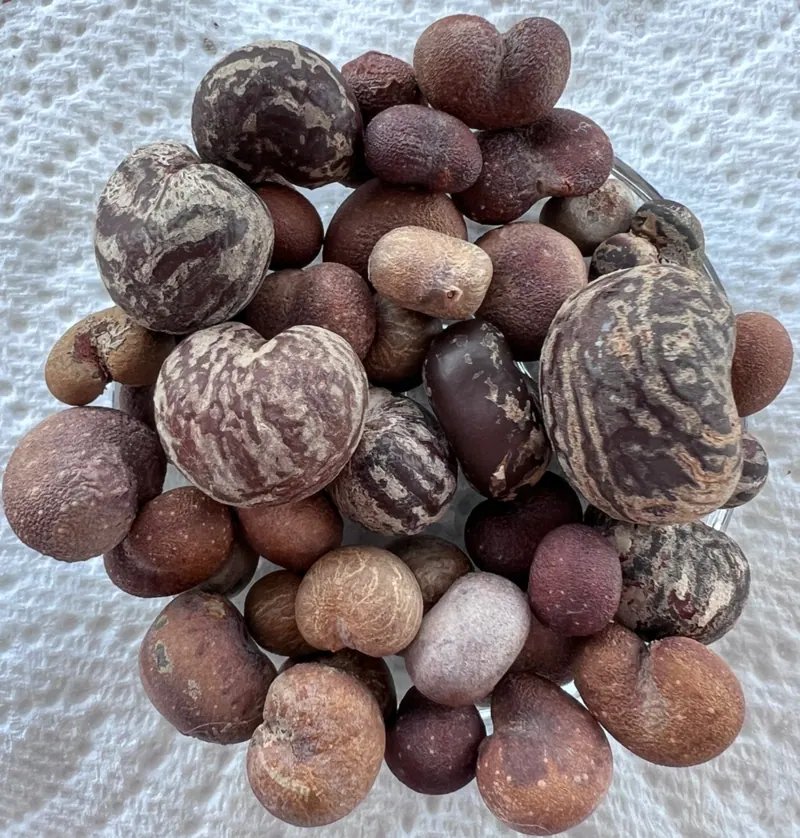
,_parque_nacional_de_Tarangire,_Tanzania,_2024-05-24,_DD_78.jpg)