Za Baobab (Adansonia za)
- Native to
- Madagascar
- Height
- About 100 ft
- IUCN status
- Near Threatened
- Also called
- Za, Zaha, Bozy Be, Ringy
- Synonym
- Adansonia alba
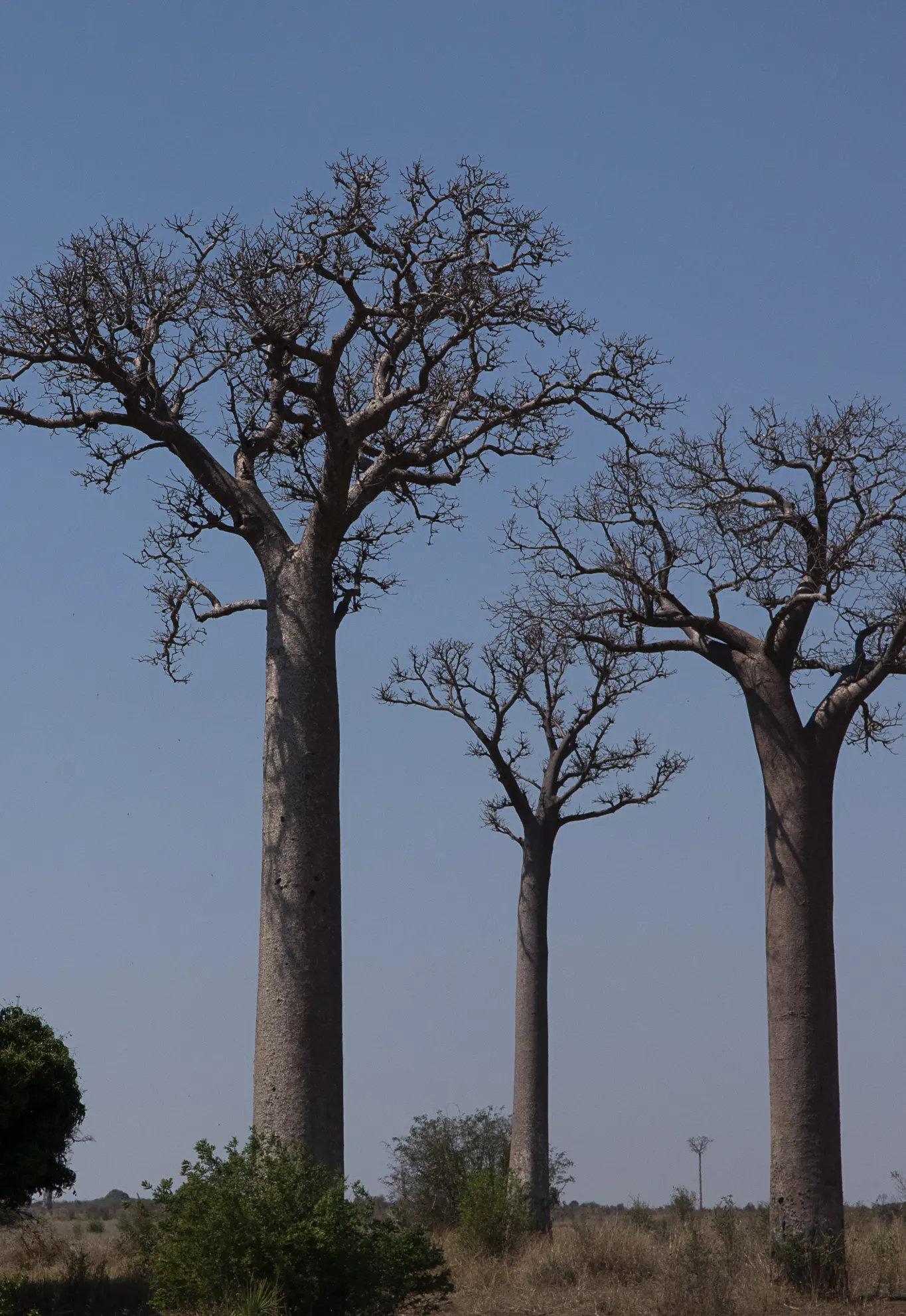
Like its close genetic cousin, Adansonia madagascariensis, the Za Baobab can grow to about 100 feet and over 10 feet wide.
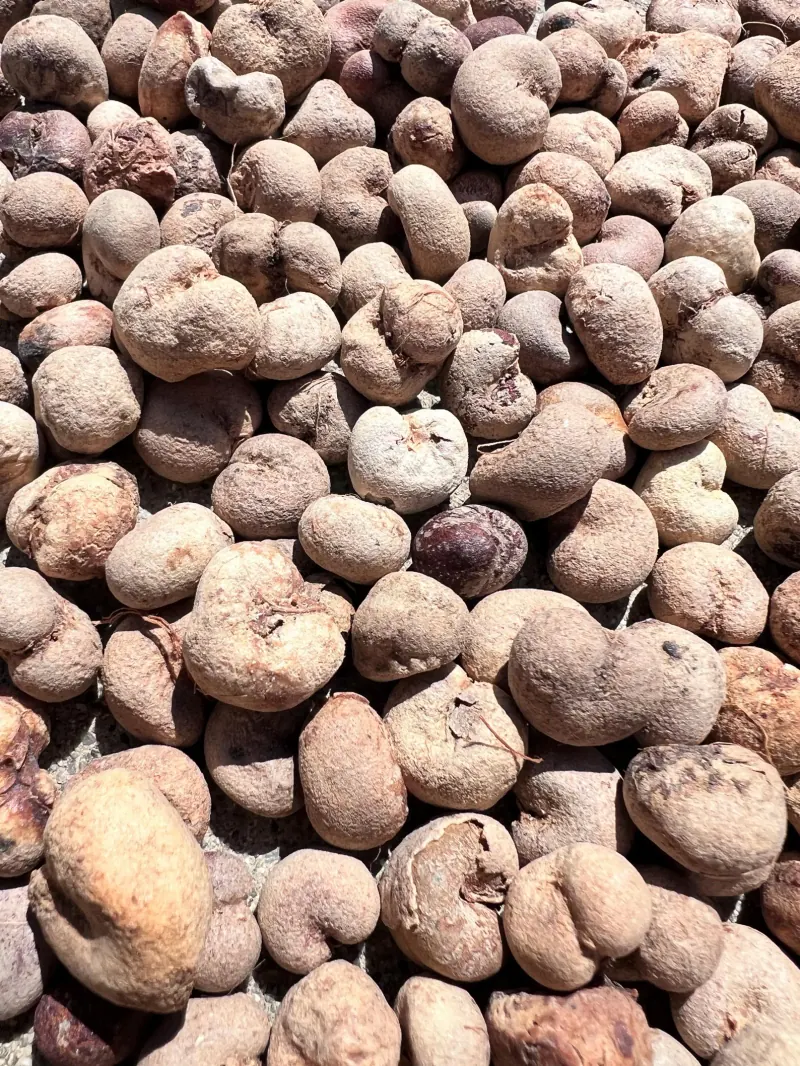
It has a smooth, steel grey bark. Its leaves are fairly basic among baobabs, with 5–8 smooth leaflets on palmate leaves attached to petiolules that can reach an inch long. The flowers are green on the outside and dark red within. Its fruits can be small or large, but are often misshapen with a swollen peduncle and thick, rough coats.
Za baobabs are the most abundant of the Malagasy baobabs, found along the western part of Madagascar. The northern populations in the Sambirano region used to be counted as za too, but a 2026 genetic study showed they’re their own species, now called Adansonia bozy.
They are classified as Near Threatened, primarily due to habitat loss and a lack of young trees replenishing the forests (climate change). With bozy split off, za is a smaller species than once thought, so its status may be reviewed.
Growing za
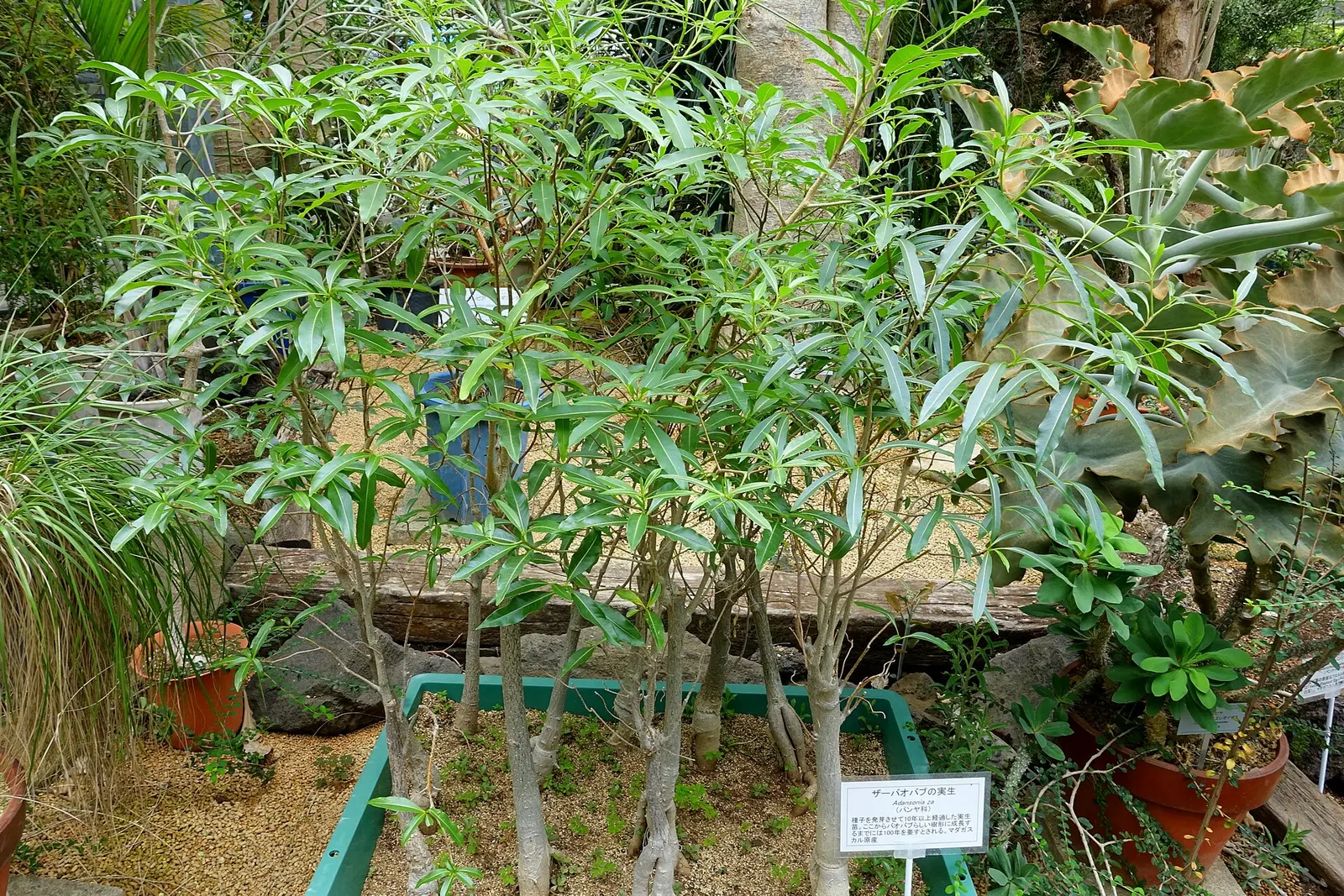
Za germinates easily — usually in 1 or 2 weeks — and grows fast. The dried fruit coating on the seeds can be rubbed off after soaking, though there’s no need. Water twice a day after sowing. Germination guide →
Where to see it
- Baobabs Amoureux Near Morondava, Menabe, Madagascar
All famous baobabs and where to see them →
Other baobab species
African Baobab · Australian Baobab (Boab) · Grandidier's Baobab · Malagasy Baobab · Bozy Baobab · Suarez Baobab · Fony Baobab · Perrier's Baobab