
Learn
All About Baobabs
The baobab basics: all eight Adansonia species, where they grow, how they store water, why the oldest trees are collapsing, and what people use them for.
"Wisdom is like a baobab tree; no one individual can embrace it." — Traditional West African saying
The Baobab homeland is Madagascar, where 3/4 of the identified species are found. To the West, the Digitata Baobab thrives across the African continent. Due to its historical cultivation and widespread agricultural use, the African Baobab can be found in tropical or semi-tropical regions across the world. On the island of Madagascar, however, six other species of baobab, each boasting a beautiful diversity of colors, flowers, and shapes, remain relatively under-researched.
Due to a general lack of conservation for the Malagasy baobabs and their habitats, three of the six are classified as Endangered by the IUCN, while two others are classified "Near Threatened".
In addition, over the last couple of decades, many of the world's largest, oldest baobab trees have been succumbing to climate change. Now is the time for responsible cultivation of not only the African baobab, but the beautiful and diverse Malagasy baobabs as well.
The eight species
There are eight species of baobab, each with unique characteristics. Six are endemic to Madagascar, one to mainland Africa, and one to Australia.
Madagascar
Known as Bozy in Madagascar, six of the eight species of baobab are endemic to the mega island. More on the Malagasy baobabs →
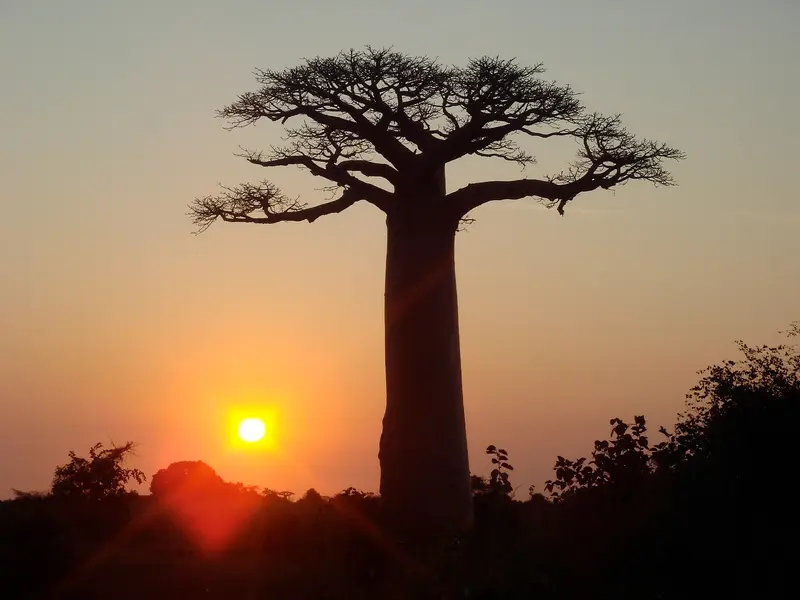 Grandidier's BaobabAdansonia grandidieriEndangered
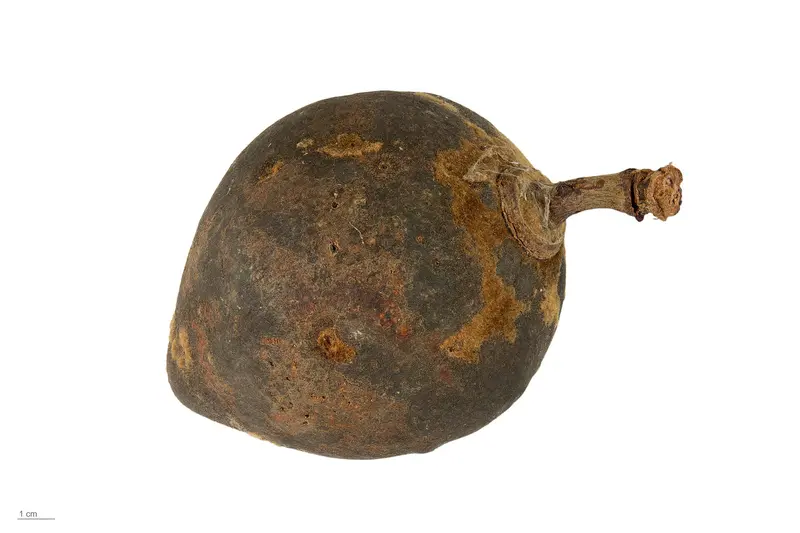 Malagasy BaobabAdansonia madagascariensisNear Threatened
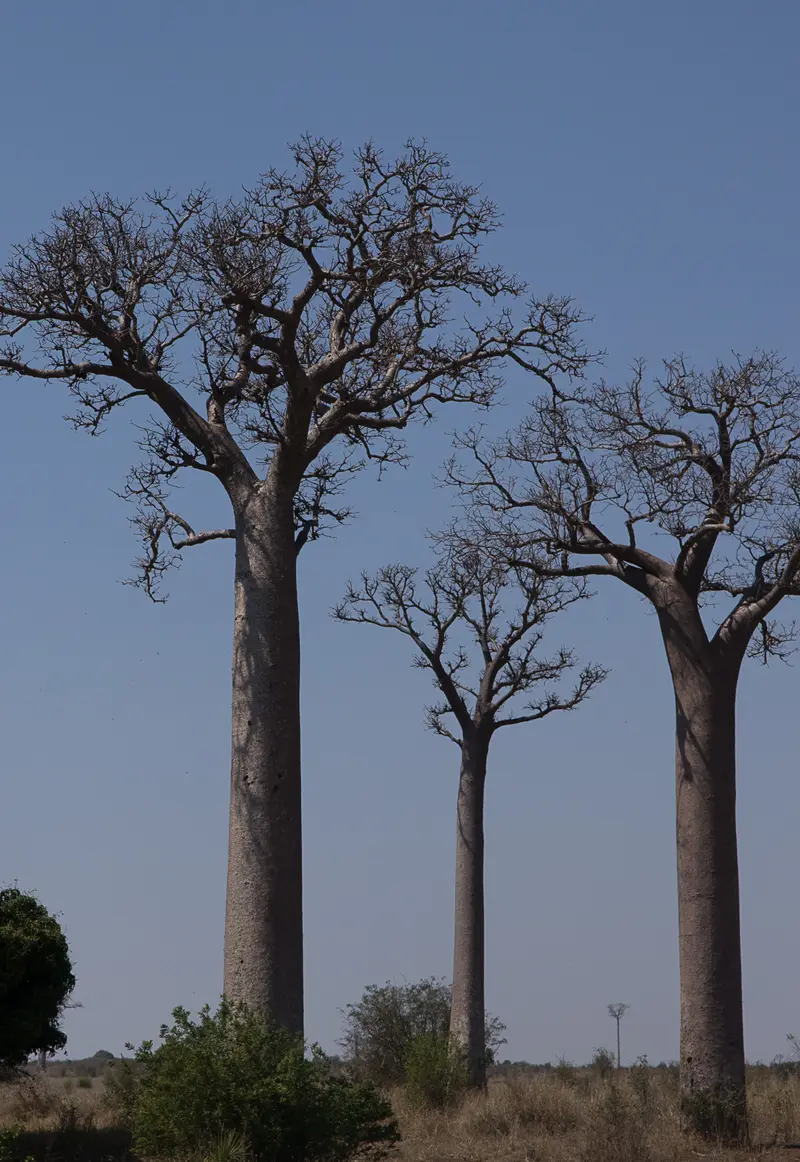 Za BaobabAdansonia zaNear Threatened
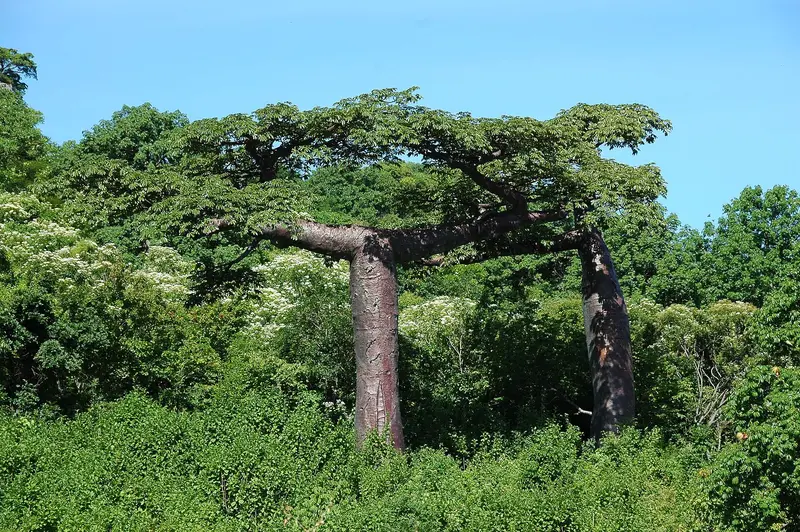 Suarez BaobabAdansonia suarezensisEndangered
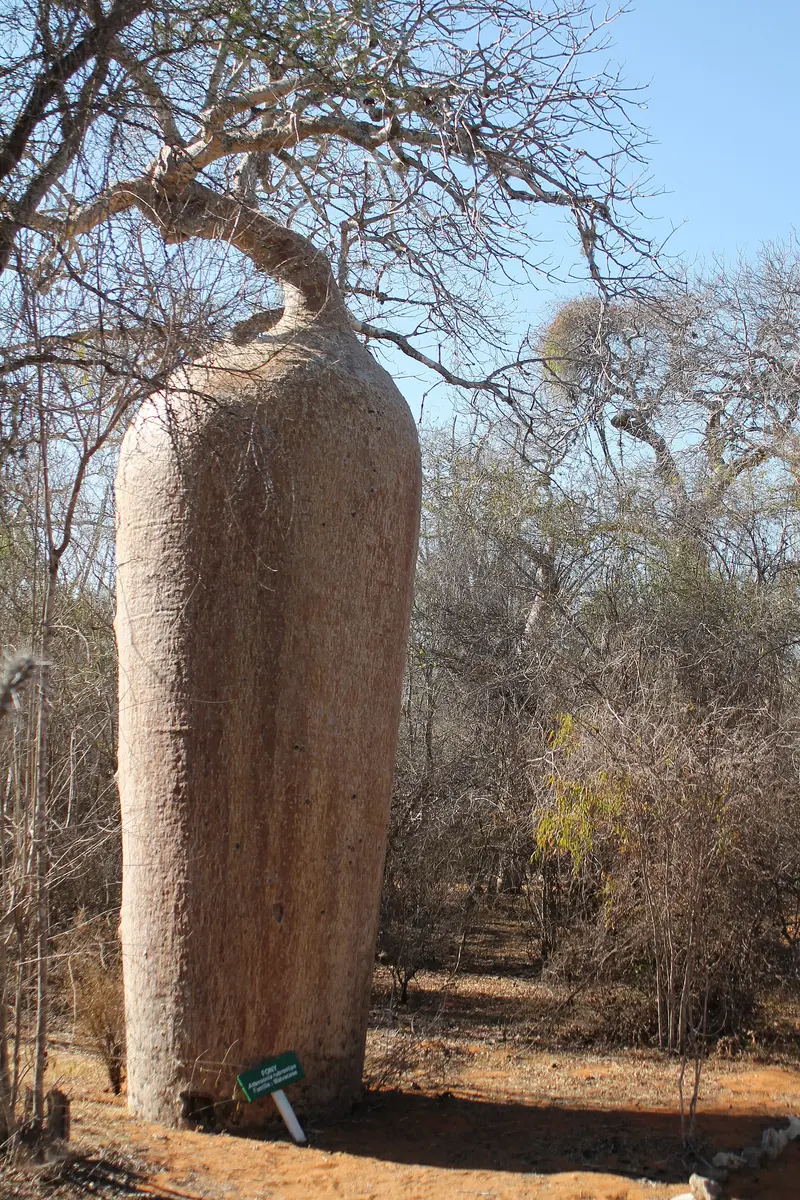 Fony BaobabAdansonia rubrostipa
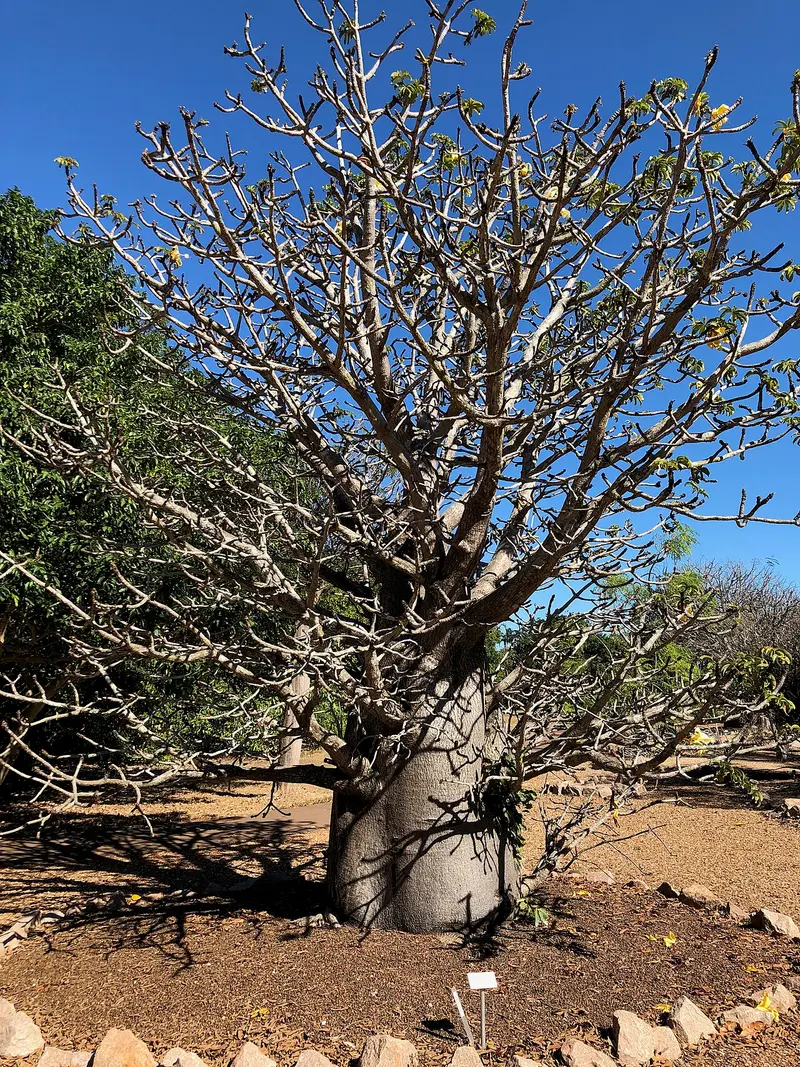 Perrier's BaobabAdansonia perrieriEndangered
Africa & Australia
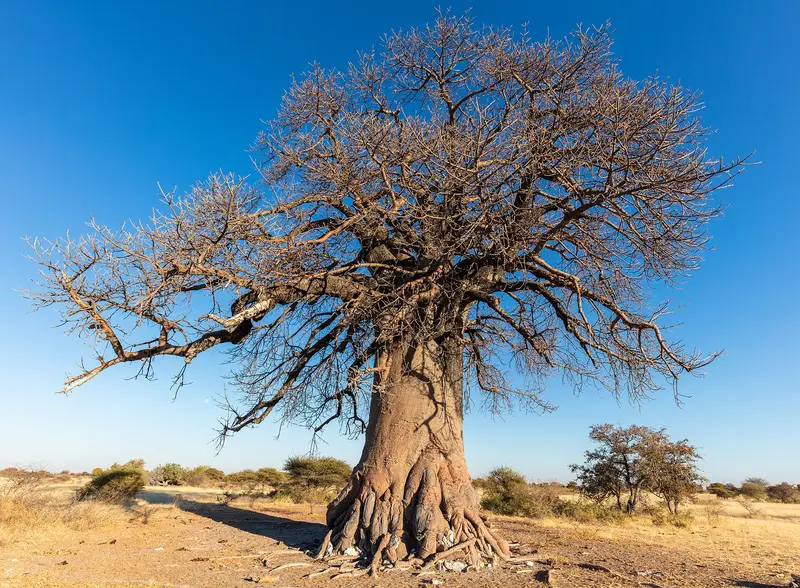 African BaobabAdansonia digitataLeast Concern
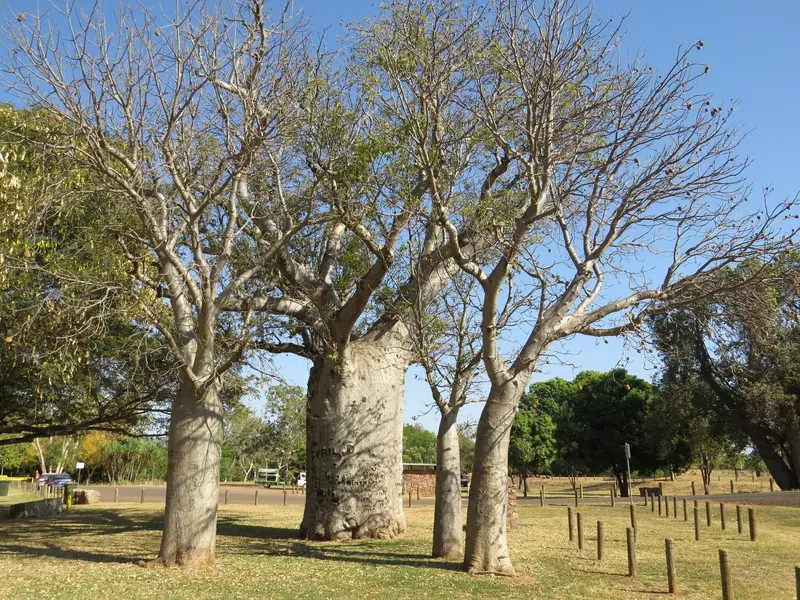 Australian Baobab (Boab)Adansonia gregoriiNot evaluated
Where the name comes from
White people 'discovered' baobabs as early as the 1500s. In 1757, the genus Adansonia was 'officially' named by the Swedish botanist Carl Linnaeus in recognition of the French botanist/colonizer Michel Adanson. At this point, these European dudes called it the Calabash Tree.
The tree gets its modern name "baobab" from the word 'bahobab', first recorded by white people in 1592 as the name for fruits sold in Egyptian markets. Bahobab likely got its name from the Arabic word for the many-seeded fruit, "bu hibab". The first full description of the genus Adansonia wasn't published until 1952.
How baobabs grow
Every species and individual baobab shares the same general habitat and growth patterns. From there, they're each a unique product of their respective environments. All baobabs are tropical, deciduous trees with palmate leaves and symmetrical flowers. Baobabs can grow to over 100 feet tall, or tap out under 20 feet — it just depends on the unique seed, weather, and habitat. Baobabs are made of water — over 79% in fact. The water provides their structure, so when drought pushes the tree to the ultimate limit, they can sometimes collapse under their own weight.
As succulents go, baobabs are renowned for their remarkable growth form, adapted perfectly for their semi-arid, drought-stricken habitats. They use only a tiny fraction of their stored water for growth, instead using it to maintain their structure. The trees can live for years without flowering, keeping their leaves inactive until the first spot of a rainy season. As soon as the rain stops, they drop their leaves to maintain moisture. Many of the oldest baobab trees appear to be isolated, withstanding the changing climate over thousands of years as the once tropical forests around them grew arid.
Baobabs have often been referred to as "Upside Down Trees" because of their root-like branch formations. Beneath the tree, its roots can extend over 160 feet. Mature baobabs often keep shallow roots only 5 feet deep, taking full advantage of any rainfall. With perfect weather and soil, a baobab can grow straight and mighty. In drought-stricken conditions, baobabs tend to take on the shape of the bulbous blobs we love so much.
Flowers and fruit
Baobab flowers are large and flamboyant, screaming for attention from pollinators for their 15-hour-a-year pollination frenzy. Some flowers can bloom in just 30 seconds, visible to the naked eye. Baobabs are experts at waiting patiently for big, fast actions. Each species is adapted to attract different pollinators. Adansonia grandidieri and Adansonia suarezensis, for instance, have brush-shaped flowers to attract fruit bats and lemurs. Several Malagasy species are adapted to attract exclusively the long-tongued hawkmoth. The African baobab uses fruit bats for pollination.
The pollinated flowers turn to large, often oblong fruits that fall after drying out completely. The seeds are coated in the baobab fruit, used as a food, fermentation starter, and medicine. The fruit is packed with vitamin C and is often used as a substitute for cream of tartar. On the African and Australian continents, the fruit is often consumed by large mammals and dispersed as such. In Madagascar, the seeds are dispersed by water.
Age, collapse, and conservation
Because baobab trees are succulents, they can be notoriously difficult to age. Once believed to live over 5,000 years, modern scientists estimate the oldest baobabs to be about 2,000 years old. When they die, they crash, collapsing under their own weight into a splintered mess that decomposes quickly due to being primarily water. The mysterious but not-unexpected collapses of the world's oldest trees in the 21st century have lit a fire under baobab enthusiasts' asses.
Conservation efforts for not only the baobabs, but Madagascar's plethora of biologically diverse flora and fauna, have been underway. Several international nonprofits and trusts are dedicated to the preservation of these species, but habitat loss, over-harvesting, and climate change are fighting hard against their survival. The most popular and picturesque of the baobabs, Adansonia grandidieri, is endangered, but eco-tourism efforts have begun to bring more attention to preserving them. Across the world, forests are seeing fewer and fewer young baobab trees, which depend on the extended wet seasons that climate change is making more and more rare.
Uses
The African baobab has exploded in popularity this century. Its fruit is deemed a 'superfruit', so fancy people around the world have created a market that supports many African communities with little to no overhead. Traditionally, baobabs have been used by indigenous people for centuries for their edible, spinach-like leaves, medicinal roots, and handy bark. Baobab seeds are rich and provide massive amounts of oil when pressed, which is used for both body care and cooking.
Baobab fruit is a light-colored powdery substance rich in vitamin C, calcium, potassium, and tartaric acid. It's traditionally used for making sweet and sour drinks. Mature baobab bark can be up to 6 inches thick, and is easily peeled from the tree and used for shelter, fabric, and rope — all without killing the tree. The bark can also be used to feed and water cattle in extreme droughts. The spongy wood is useless for fuel or serious construction.
Taking advantage of the baobab's remarkable resilience, locals often carve large basins and wells inside the trunk of a baobab tree. The wood heals itself expertly. Baobab trees have been used for shelter, storage, toilets, and even a fabled prison throughout history. Most of the oldest baobabs are hollow inside, providing shelter for the animal kingdom as well.
Reference: Baobabs of the World, Andry Petignat & Louise Jasper, 2015.